














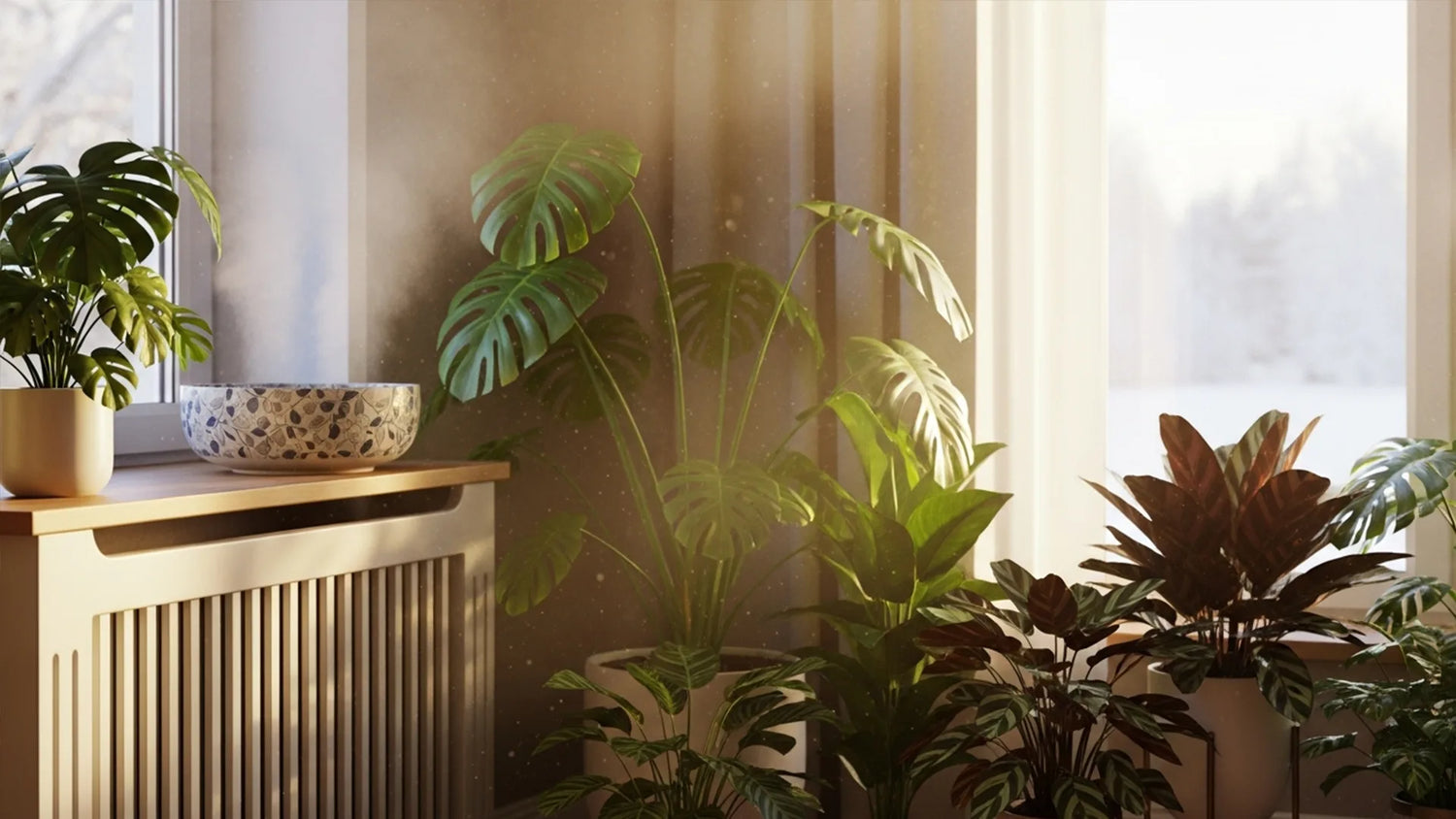
Humidity in Winter: How Your Houseplants Survive the Heating Season
In winter, the humidity in apartments often drops rapidly. The reason: Cold outside air physically cannot hold much water, and inside, the heaters blast the last bit of moisture out of the room.
The problem: Many common houseplants cope fine with 40–60% humidity, but true tropical residents often only feel comfortable starting at 60%. If the value falls below this, brown edges and drooping leaves appear. Especially during the heating period, clever tricks and consistent care are crucial.
And so you don't have to think about this yourself, sadplants.fun is here to help.
How Care Reminders from SadPlants Help
We rely on SMS-based Care Reminders that annoy you (in a friendly way!) exactly when it's time for care.
Specifically, this means: You get reminders to check the soil first ("Finger Test") before watering blindly – plus short tips on location, humidity, and drafts that fit your plant exactly. This way, you reduce typical beginner mistakes without having to constantly ask Google yourself.
Since humidity is the final boss in winter, here are simple methods and household remedies to increase it:
1. Group Plants Closer Together
If you place plants in groups, a small microclimate is created because they all release water into the air via their leaves (transpiration).
- The Trick: The denser the group, the higher the local humidity.
- Perfect for: Tropical species near radiators. Just make sure no pot is standing directly in the hot air stream.
2. Water Bowls or Pebble Trays
Place shallow bowls with water under your pots. Important: Use pebbles or a grid as spacers so the pot bottoms don't stand directly in the water (danger of waterlogging!). Through evaporation, a moisture cloud forms directly around the plants without "drowning" the roots.
3. Passive Evaporation on Radiators
Open bowls or dishes with water near radiators or on sunny windowsills provide a continuous moisture boost through slow evaporation.
- Pro Tip: The larger the surface area (width), the stronger the effect. A wide bowl does more than a tall vase.
4. Indoor Fountains: Decor with Function
Small indoor fountains or water bowls directly on (or near) the radiators work like a passive humidifier in mini format. The warm air above the heater continuously absorbs water, which permanently balances out the dry winter air.
- Benefit: Your plants profit from the humidity, you from the soothing background splashing. Plus, it's easier to breathe in rooms with some humidity – something we have in common with plants.
5. Moving to Humid Rooms (Bathroom & Kitchen)
Bathroom and kitchen often automatically have higher humidity due to showering and cooking compared to the living room (50-70% vs. 40-60% in the living room). This is ideal for plants that love moisture – but only if they get enough indirect light.
- Prerequisite: The plant needs a window or indirect light. It must not stand directly in a draft or on ice-cold tiles.
- Ideal Candidates: The Pothos (Epipremnum) and the Monstera Deliciosa are pros for humid rooms and get by with less light. The Snake Plant (Sansevieria) also works in the bathroom but needs a bit more brightness.
- Not Ideal: Ferns need high humidity but often fail in dark bathrooms without windows. Calathea is too sensitive to the temperature fluctuations caused by regular showering.
6. Use Daily Household Routine
You can cleverly use your daily routine to help your plants:
- Cooking: A gently simmering pot of water or the open kitchen door after cooking pasta distributes steam.
- Showering: Leave the bathroom door open after showering. The water vapor distributes into the hallway or adjacent living space.
- Drying Laundry: Fresh laundry in the living room noticeably increases humidity for several hours.
7. Occasional Misting – But Done Right
Light misting can help thin-leaved species for a short time, but is no real substitute for permanent humidity.
- Important: The leaves must be able to dry off again. A permanent film of water or water in the leaf axils promotes fungal diseases.
- Who likes it? Ferns.
- Who hates it? Succulents. Leave them alone with the sprayer.
8. Glass Domes, Cabinets & Mini Greenhouses
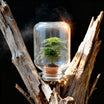
For extra protection, you can use glass domes or cabinets to build a very humid microclimate. This is basically the intensive care unit for moisture junkies.
- Care: Regular airing is mandatory so no mold forms.
- Too complicated? If that's too much effort for you, check out our Easyplants – they regulate their water balance themselves thanks to a reservoir.
Warning: Don't turn your home into a rainforest, otherwise you'll just get wall mold! Don't forget shock ventilation (opening windows wide). We don't actually have to say that. Right? RIGHT?
Further Winter Dangers for Your Green Friend
1. No Over-Fertilizing
In winter, most houseplants shut down their growth (dormancy) and need significantly fewer nutrients. If you continue fertilizing normally now, you stress the plant, weaken it against the dry air, and risk salt damage to the roots.
- Solution: Reduce fertilization drastically or pause completely until spring.
2. Changed Light Conditions
Winter means little light. Place your plants in the brightest spots with plenty of indirect light.
-
Warning: Do not press directly against ice-cold window panes! A small distance to the glass protects against cold damage ("thermal bridge") and drafts.
Enough Moisture for Inside? Then Let's Talk About Outside.
If you follow all these tips, your houseplants should survive this winter (and if not, we have our Care Reminders). But we both know: Sometimes love alone isn't enough. Sometimes you need Karma points. So if you're already saving ecosystems on the windowsill, why not go a step further?
Life Terra: When Care Goes Beyond the Pot
Anyone who cares for houseplants automatically builds a relationship with living ecosystems – this is exactly where initiatives like Life Terra come in. Life Terra aims to plant hundreds of millions of trees in Europe and locate and monitor every tree long-term via modern technology to actively do something against the climate crisis.
So if you optimize your humidity at home and keep your plants healthy with Care Reminders from sadplants.fun, you can take the next step and contribute via Life Terra to new trees taking root outside your apartment.

Leave a comment
This site is protected by hCaptcha and the hCaptcha Privacy Policy and Terms of Service apply.